Backgammon Rules, Tips & Tricks
Backgammon is a classic board game that combines strategy, tactics and a bit of luck. With roots going back thousands of years, it remains a popular pastime around the world. This guide will take you through the basic rules and gameplay, making it easy for beginners to get started.
Objective of Backgammon
The object of backgammon is to bear off all your checkers into your home board before your opponent does. The first player to bear off all his checkers wins the game.



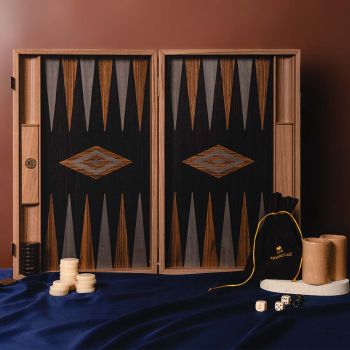

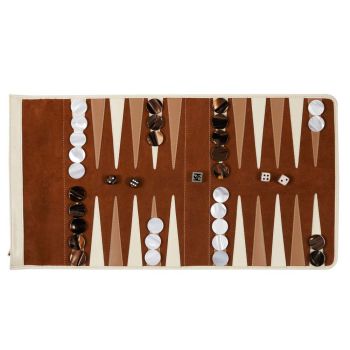
The Backgammon Board
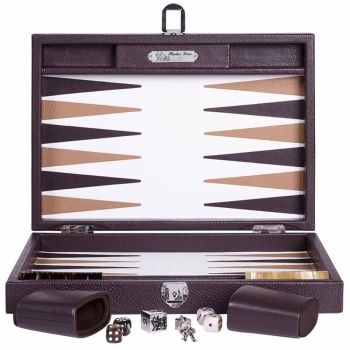
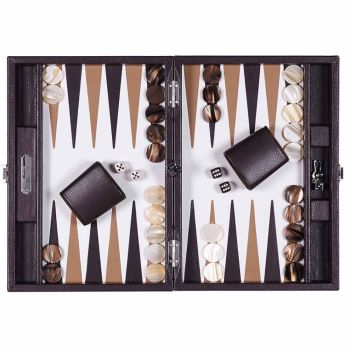
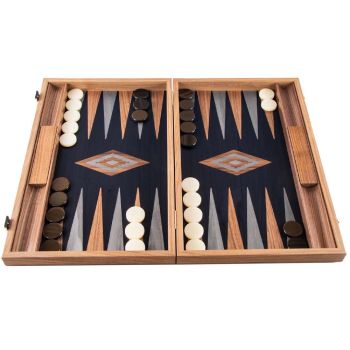
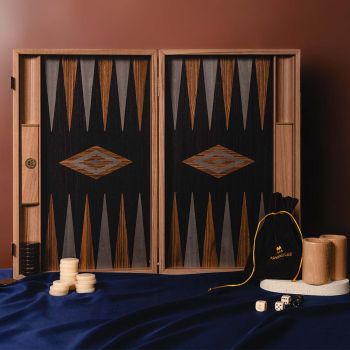
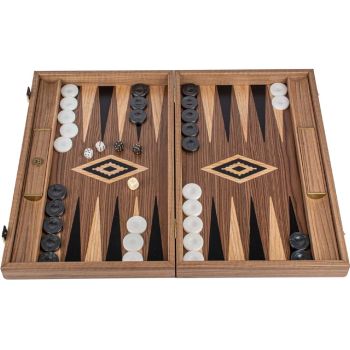
The backgammon board consists of 24 narrow triangles (points): These are grouped into four quadrants, each containing six points. The quadrants are:
-
Your home board
-
Your outer board
-
Your opponent's home board
-
Your opponent's outer board
-
The bar: A ridge in the middle of the board that separates the two home boards.
-
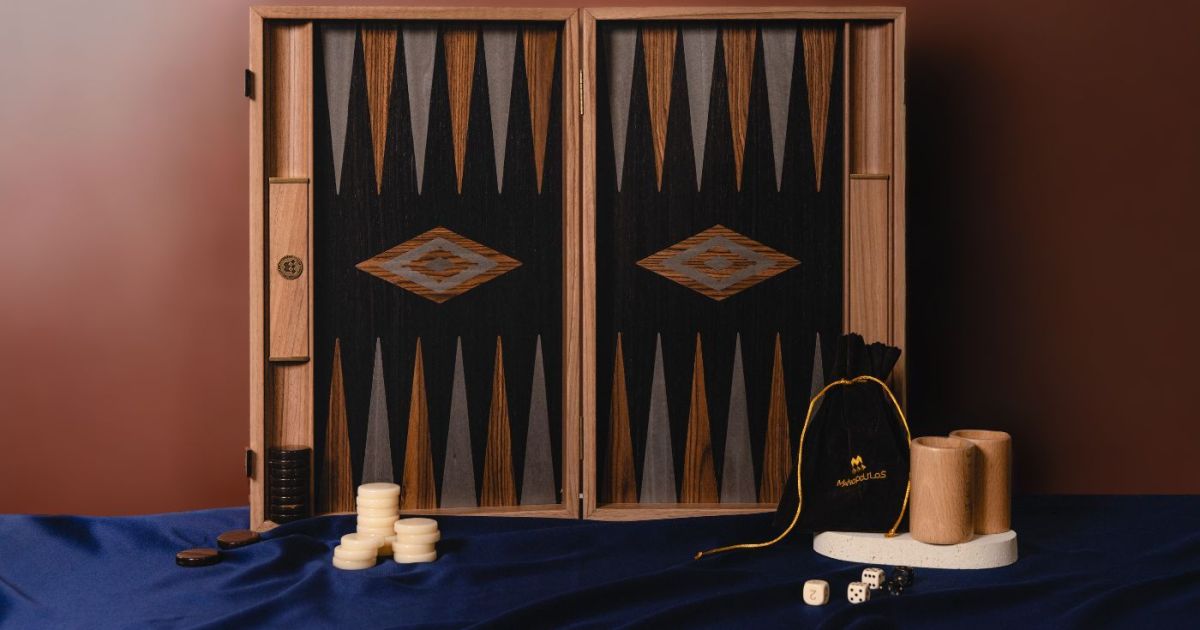
The checkers: Each player has 15 checkers, usually in contrasting colours.
-
Dice and a dice cup: Two six-sided dice determine movement.
-
Doubling cube: Used to bet or raise stakes in competitive play (optional).
Setting Up the Board
Each player’s checkers are placed as follows:
-
2 checkers on the 24-point
-
5 checkers on the 13-point
-
3 checkers on the 8-point
-
5 checkers on the 6-point
Backgammon Gameplay
1. Roll to start
Each player rolls one die. The player with the higher number goes first, using both dice for his first move. If both players roll the same number, they roll again.
2. Movement of the checkers
Checkers move forward (towards the home board) according to the numbers rolled on the dice. Each die represents a separate move. For example, a roll of 4 and 6 allows one checker to move 4 spaces and another checker to move 6 spaces, or a checker to move a total of 10 spaces in two separate moves. A point can only be landed on if it is open, i.e. unoccupied, occupied by your checkers, or occupied by a single opposing checker (called a blot).
3. Hitting and entering
If you land on a point occupied by a single opposing checker, that checker is hit and placed on the bar. A checker on the bar must re-enter the game on the opponent's home board before any further moves can be made. The re-entry point is determined by the roll of the dice. If there are no valid re-entry moves, the turn is lost.
4. Bearing Off
-
Once all your checkers are in your home board, you can begin bearing off.
-
To bear off, roll the dice and remove checkers from the points corresponding to the dice numbers. For example, a roll of 5 allows you to remove a checker from the 5-point.
-
If there is no checker on the rolled point, you can move a checker from a higher-numbered point.
Winning the Game
The game ends when one player has borne off all his checkers. If the opponent has not borne off any of his checkers, the winner wins a gammon (double points). If the opponent has any checkers on the bar or in the winner's home board, it's a backgammon (triple points).
Strategy Tips
-
Control key points: Occupy strategic points to block your opponent's movement.
-
Build Anchors: Place two or more stones on a point to create a blockade.
-
Balance Risk and Security: Weigh the benefits of aggressive moves against the risk of exposing your checkers.
-
Use the doubling cube: In competitive play, the doubling cube adds strategic depth by allowing players to raise the stakes.
Common terms
-
Blot: A single checker on a point, vulnerable to being hit.
-
Prime: A series of successive occupied points forming a blockade.
-
Bearing off: The process of removing checkers from the board.
-
Gammon: Winning before your opponent bears off any of your checkers.
-
Backgammon: Winning while your opponent has checkers on the bar or in your home board.
Backgammon is a game of both chance and skill. While the dice determine your options, strategic thinking and planning are key to success. With practice, you'll learn to anticipate your opponent's moves and master the art of this timeless game.